
The Best Fluffy Pancakes recipe you will fall in love with. Full of tips and tricks to help you make the best pancakes.
The same copper-bottom cookware your grandmother trusted, crafted for today’s kitchen. Built to last generations.

Products Similar to Revere Ware

Saucepan Copper Clad With Lid
Material: stainless steel, painted finish, copper–silver color, 1-quart capacity, and weighs 1.3 pounds.

Copper Clad Frying Pan with Lid
The cookware is made of copper, comes in black and silver, is oven-safe, includes a lid, and works with electric coil and gas stoves.

Copperclad Bottom Covered Saucepan
Stainless steel vessels and lids provide lasting beauty, while the copper bottom ensures quick and even heat distribution.

Vintage Copper Clad 7 Inch Saucepan Skillet
Made of stainless steel, this silver cookware is gas-stovetop compatible and works with smooth-surface induction devices.

Classic Stainless Steel 4-Quart Covered Saucepot
A full-cap base on the saucepot uses a thick aluminum core enclosed in stainless steel to provide quick, even heating.

Stainless Steel Milk Pot Wood Handle Pan Spout Cookware
A compact metal saucepan that’s easy to clean by hand, features a space-saving handle design, and stores efficiently.
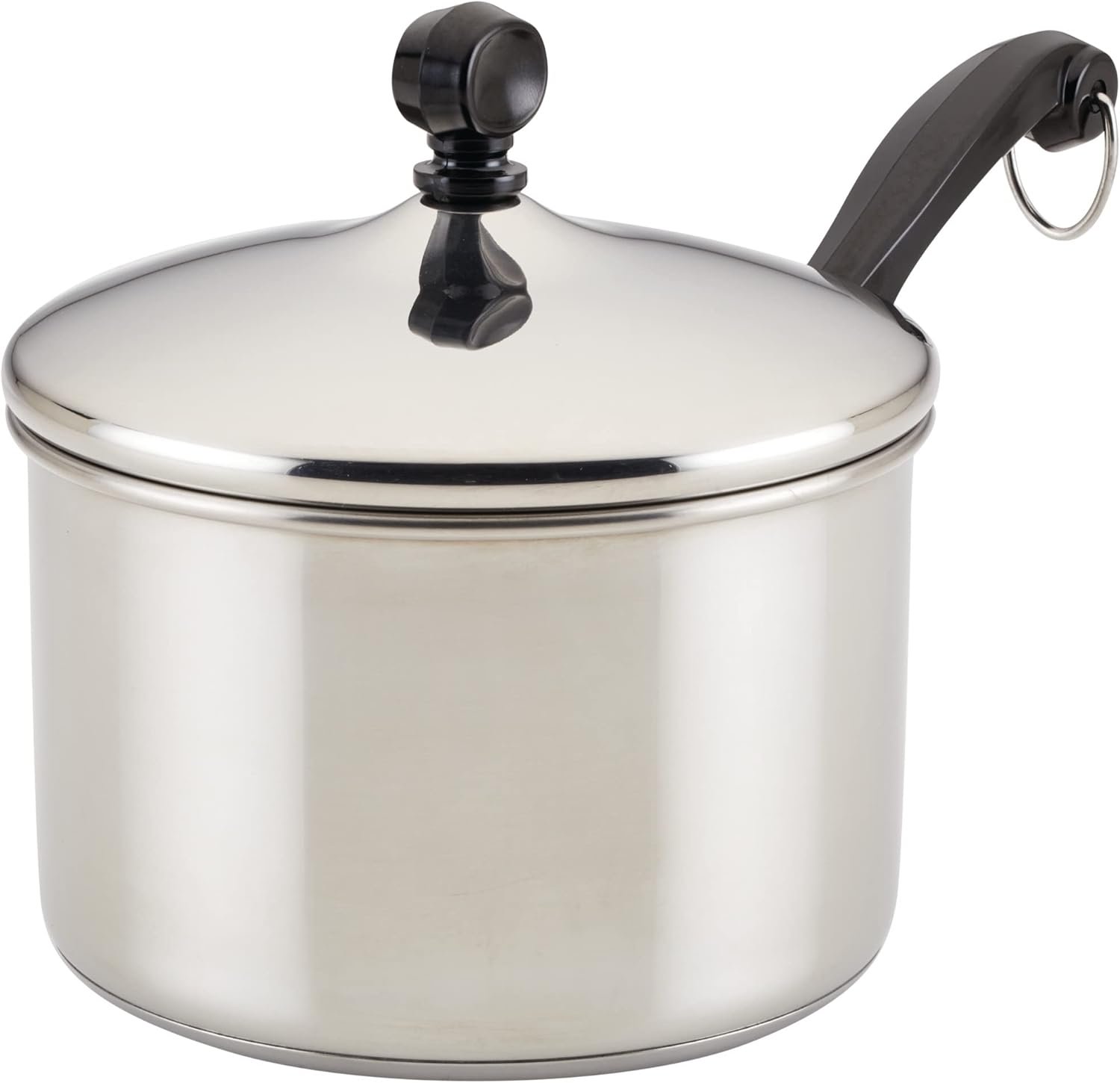
Classic Series Stainless Steel Sauce Pan with Lid
The 2-quart saucepan features a full cap base with stainless steel layered over a thick aluminum core for fast.
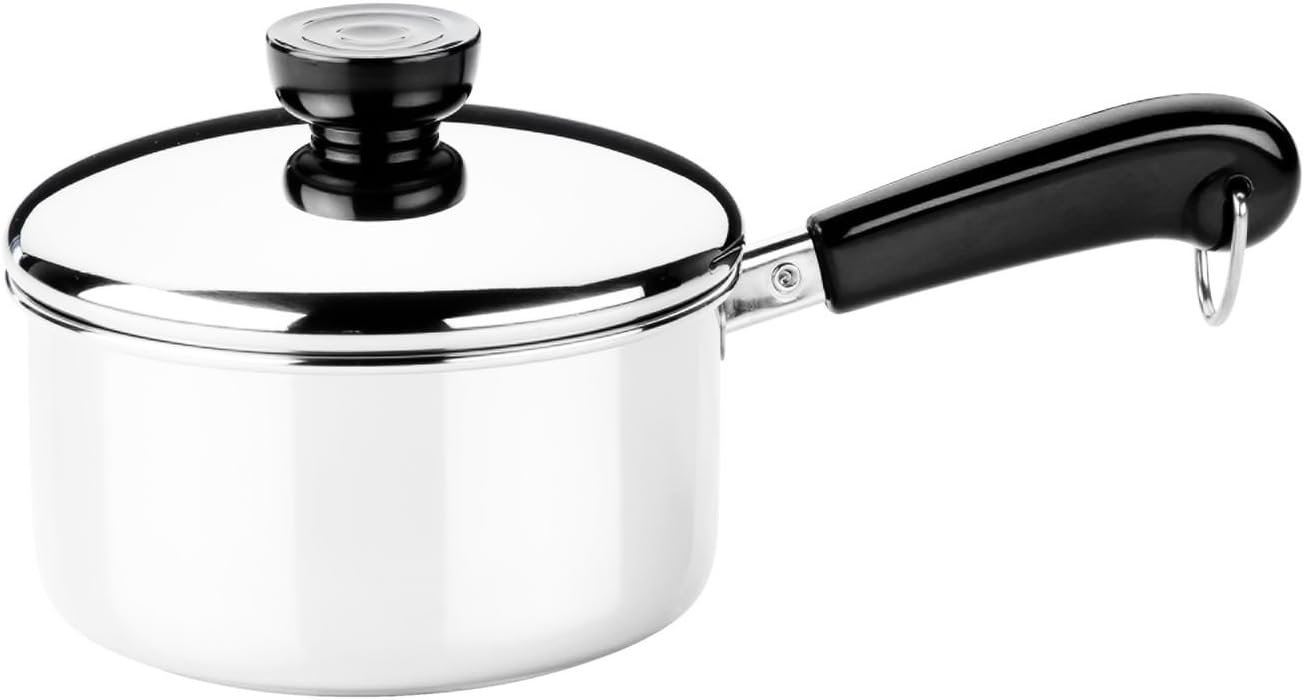
Try-Ply Bottom 1-Quart Saucepan with Lid
This 1-quart saucepan is perfect for warming sauces and side dishes, featuring a mirror-finish 18/10 stainless steel construction.
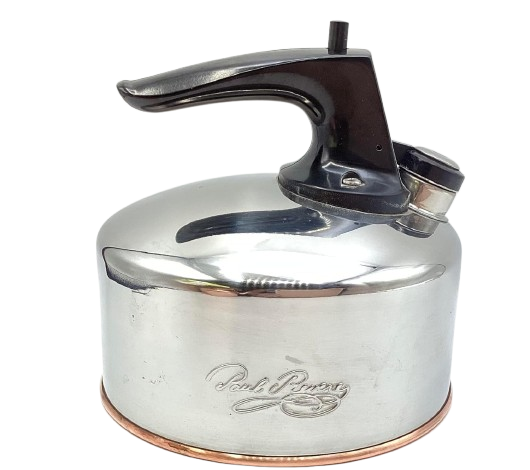
Teakettle Stainless Steel with Copper Bottom
Crafted from durable stainless steel in a classic silver and copper finish, this Revere piece combines timeless style.
From the Test Kitchen
Monthly dispatches featuring seasonal recipes and the occasional secret from vintage cookbooks.
Where to Buy Revere Ware in 2025?


Revere Ware Timeline
1938–1939
Revere designs its first copper-clad stainless steel cookware with Bakelite handles.
1940s–1950s
The Riverside, California factory begins shipping cookware. A new factory opens in Clinton, Illinois to meet demand.
1968
Revere reduces material thickness and changes the classic logo to the “1801” style.
1978
Revere starts stamping the manufacturing year on many pieces.
1985
Corning purchases Revere Ware and U.S. production begins to decline.
1998
World Kitchen (later Corelle) becomes the owner of the brand.
2018
Corelle discontinues the Revere Ware brand.
2023
Full Sail IP Partners acquires Revere Ware and announces plans to revive it.
The Pans That Outlived Your Grandparents
Revere Ware started way back in 1939. A metallurgist named W.A. Cole finally figured out how to bond copper to stainless steel. The result? Cookware that heated incredibly evenly and lasted forever. Those original pans with the distinctive copper bottoms quickly became fixtures in American kitchens. They’re the exact kind of rugged pots and pans that got passed down through families because honestly, nothing else worked quite as well. My grandmother had a massive set. Heavy things.
We’re still here today because the absolute fundamentals of good cooking haven’t changed a bit. Real culinary work needs responsive heat, durable materials, and tools that refuse to quit after a few years of daily abuse.
Other modern brands out there love to chase flash trends or design things around planned obsolescence. We don’t. We just keep making the same solid pieces that professional chefs and home cooks have relied on for generations. The specific pan your mother swore by in 1965 uses the exact same construction principles as what we manufacture today. No shortcuts.
There’s something deeply satisfying about cooking dinner with equipment that predates the internet. These things have survived countless dinner parties and somehow still perform like they did on day one.
But don’t get it twisted, these aren’t precious heirlooms meant to just sit on a shelf for display. They’re working tools that actually get better with age. They develop a perfect seasoning and a distinct wear pattern that makes them uniquely yours. When you buy Revere Ware, you’re not just getting standard cookware. You’re getting something that will stubbornly outlast whatever fancy kitchen renovation comes next.
Cooking With Confidence Since 1939

“Found my grandmother’s 1960s Revere Ware skillet at an estate sale last year. After a quick polish, it cooks as evenly as my expensive modern pans—maybe better. These pieces really were built to last generations.”
Margaret K.

“The copper bottom on my sauce pan still conducts heat perfectly after 15 years of daily use. Worth hunting down the vintage pieces if you can find them—the quality difference from newer cookware.”
David T.

“Inherited my mom’s complete 1970s set when she passed. Every single pot and pan still has that signature shine after a good cleaning, and nothing sticks when you use them properly.”
Linda M.


Common Questions Answered
The copper bottoms can be restored using a paste made from salt and vinegar or lemon juice. Apply the mixture, let it sit for a few minutes, then buff with a soft cloth. For everyday cleaning, warm soapy water works well for both the stainless steel and copper portions. Avoid abrasive cleaners that might scratch the surfaces.
Bakelite handles from older pieces can often be tightened by accessing the screw inside the handle. Remove the hanging ring or cap at the end of the handle to find the screw. Tighten it carefully with a screwdriver. If the handle is cracked or the threads are stripped, replacement handles are available from restoration suppliers.
Stainless steel requires proper preheating and temperature control. Heat the pan on medium for 2-3 minutes, then add oil or butter. The fat should shimmer but not smoke. Adding food to a cold pan or cooking at too high a temperature often causes sticking. Letting meat develop a crust before attempting to flip also helps prevent sticking.
Most vintage stainless steel cookware with copper bottoms won’t work on induction cooktops since copper isn’t magnetic. A simple test: if a magnet doesn’t stick to the bottom, it won’t work on induction. These pieces perform beautifully on gas, electric, and ceramic cooktops though.
Hand washing is recommended to preserve both the cookware and handles. Dishwasher detergents can be harsh on copper bottoms and may cause discoloration. The high heat can also damage Bakelite handles, causing them to become brittle or crack over time.
Several online retailers specialize in vintage cookware parts. Kitchen supply stores that focus on restoration often carry universal handles that fit many older models. Online marketplaces and auction sites also have sellers who specialize in replacement parts for classic cookware lines. Local antique shops sometimes have damaged pieces that can serve as parts donors.